
Reading progress
Follow the guide step by step
Use quick jumps to move between sections and keep your place while reading.
current section: —
Indian weddings are rarely a single afternoon — they're often a three-to-five-day sequence of distinct events, each with its own dress code, rituals, and guest list. Whether you're getting married, attending as a guest, or just trying to understand what all the fuss is about, this guide breaks down exactly what happens, in what order, and why.
The Big Picture: Why Indian Weddings Are Multi-Day Celebrations
Unlike a Western wedding that compresses everything into one day, an Indian wedding is really a series of connected ceremonies spread across several days, sometimes even weeks for larger families. The logic behind this is partly religious — many rituals are prescribed in specific sequence and can't be combined — and partly social. Marriage in India is traditionally understood as a union of two families, not just two individuals, so the celebration is built to give every relative, neighbor, and family friend a chance to participate in some capacity. It's common for guest counts to run from 300 to over 1,000 people once you add up all the events, even though not everyone attends every single one. Close family and the wedding party are expected at all functions; extended relatives and friends often attend only the sangeet, the main ceremony, and the reception.
Before the Big Day: Engagement, Roka, and Sagai
The formal process usually starts with a Roka or Sagai — an announcement ceremony where both families meet, exchange gifts, and confirm the match is settled. This can happen months or even a year before the wedding itself. It's typically a smaller, home-based gathering with immediate family, sweets, and an exchange of rings or gifts between the couple. In many communities this is followed by a formal engagement (often called Sagai in North India), which is a larger, more public event where the couple exchanges rings in front of extended family and close friends. These early events matter because they set the tone for how involved each family will be in planning the events that follow, and they're often when initial guest lists and budgets get discussed.
Pre-Wedding Rituals: Mehndi, Sangeet, and Haldi
The days immediately before the wedding are packed with rituals that are as much about celebration as tradition. The Mehndi ceremony involves applying intricate henna designs to the bride's (and often female guests') hands and feet, usually a day or two before the wedding, and it's typically a relaxed, women-centric gathering with music and food. The Sangeet has evolved into one of the most anticipated events — a music-and-dance night where both families perform choreographed routines, sing, and celebrate together, often with a live band or DJ and a proper dance floor. It's become common enough that many couples now treat it like a second reception, complete with a stage, lighting, and a curated song list. The Haldi ceremony, held on the morning of or the day before the wedding, involves applying a turmeric paste to the bride and groom (often at their separate homes) for purification and good luck — it's messy, joyful, and usually restricted to close family.
The Wedding Day: Baraat, Ceremony, and Pheras
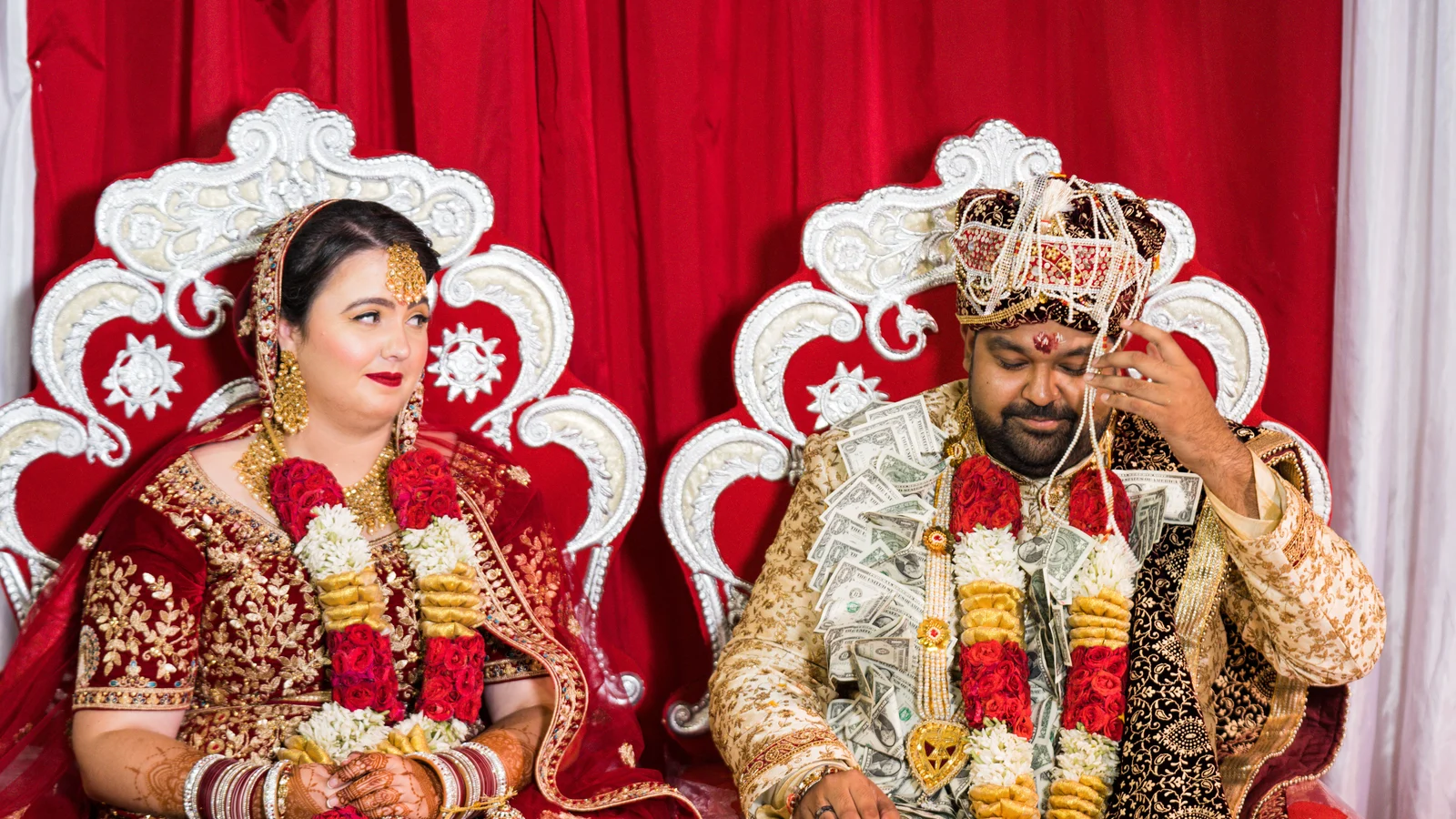
For Hindu weddings, the wedding day itself typically begins with the Baraat — the groom's processional entrance, often on a horse or in a decorated car, accompanied by a dhol player, dancing relatives, and sometimes fireworks. The bride's family formally welcomes the groom's party at the venue entrance in a ritual called Milni. The core ceremony, conducted by a priest (pandit) around a sacred fire (agni), includes rituals like Kanyadaan (the father giving away the bride), Mangalsutra or ring exchange, and the Saptapadi or Pheras — seven rounds around the fire, each representing a specific marital vow. The full ceremony can run anywhere from 90 minutes to over three hours depending on the community and how many rituals are included. It's worth noting that this Hindu framework is only one version: a Muslim Nikah is a shorter, contract-based ceremony centered on the signing of the marriage contract and mutual consent, a Sikh Anand Karaj takes place in a Gurdwara around the Guru Granth Sahib with four rounds instead of seven, and Christian Indian weddings follow a church service closer to Western format, often blended with regional cultural elements.
Regional Variations Across India
How weddings work in India changes significantly depending on region, religion, and community, so it's worth not assuming one template fits all. Punjabi weddings tend to be loud, dance-heavy, and food-forward, with the Sangeet often being the biggest party of all the events. South Indian weddings (Tamil, Telugu, Kannada, or Malayali) are generally more ritual-dense and can involve dozens of distinct steps performed early in the morning, often finishing before noon, with far less emphasis on late-night dancing. Bengali weddings include distinctive customs like the bride being carried on a decorated wooden stool (piri) to the mandap and the groom's face being hidden behind a betel leaf until the bride sees him. Gujarati and Marwari weddings often incorporate the Garba or Sangeet with folk dance forms, and Kerala Christian or Syrian Christian weddings blend church rites with regional traditions like the tying of the minnu (a gold pendant) instead of rings. If you're attending a wedding outside your own community for the first time, it's genuinely useful to ask a local friend or family member what to expect rather than assume.
Guest Etiquette: What to Wear, Gifts, and RSVP Culture
Guests are generally expected to dress festively and in bright colors — avoid white or black, which are associated with mourning in most Indian communities, unless the invitation specifies otherwise. Traditional or semi-formal Indian wear (a saree, salwar kameez, kurta, or lehenga) is always a safe and appreciated choice, though smart Western formalwear is increasingly accepted, especially at urban weddings. Gifts are typically cash, given in odd-numbered denominations (like 501 or 1,101 rupees) in a decorated envelope, since odd numbers are considered auspicious; registries are less common than in Western weddings, though increasingly younger couples are starting to use them. RSVP culture also works differently — invitations are sent out weeks in advance, but confirmations can be looser than Western norms, and hosts often plan for a buffer above the confirmed headcount because turnout at Indian weddings is notoriously hard to predict precisely.
The Reception: Seating, Food, and Logistics
The reception is usually the most Westernized-feeling event of the whole sequence — a formal evening event with a stage for the couple, extensive photography, and a large buffet-style dinner featuring multiple regional cuisines rather than a single plated meal. Because guest counts are so high and often uncertain until close to the date, seating logistics get complicated fast: many hosts skip assigned seating entirely and go with large round tables that guests fill on arrival, though families who want more control over who sits with whom (separating certain relatives, grouping out-of-town guests together, or keeping elders near the stage) benefit enormously from working out a plan in advance. If you're the one organizing the layout, a seating chart tool built for weddings makes it far easier to map hundreds of guests across dozens of tables without losing track of who's confirmed and who isn't. It's also worth thinking through the debate covered in guides comparing banquet vs round wedding tables, since large Indian receptions often mix both formats depending on the venue's shape and whether there's a stage-facing arrangement.
Budgeting and Who Pays for What
Traditionally, the bride's family bore the bulk of wedding expenses, a norm rooted in older dowry-adjacent customs, but this has shifted considerably in the last two decades, especially in urban, professional families where costs are now often split or shared based on what each side is hosting. The groom's family typically covers their own pre-wedding events (like their Haldi or Sangeet if hosted separately) and sometimes the honeymoon, while the bride's side often handles the main ceremony and reception — though there's enormous variation by region, religion, and individual family preference. Costs scale dramatically with guest count, venue, and how many separate events are held, and understanding where the money actually goes — venue, catering, decor, photography, outfits, and vendor fees — is easier when you look at a full average wedding cost breakdown rather than guessing, since multi-day Indian weddings often have five or six separate budget lines where a single Western wedding would have one.
Vendors, Planners, and Timeline: How Far in Advance Things Get Booked
For a mid-to-large Indian wedding, planning typically starts six to twelve months out, and sometimes longer for peak wedding season dates (winter months, particularly November through February, are the busiest across most of India due to auspicious date considerations and cooler weather). Popular venues, photographers, and mehndi artists in major cities get booked far in advance for these months, so couples aiming for a specific auspicious date (often chosen with a priest's input based on the lunar calendar) need to lock in vendors early. Many families hire a wedding planner specifically to manage the multi-event logistics — coordinating decor changes between the Mehndi, Sangeet, and main ceremony, managing vendor timelines, and handling the sheer scale of catering for hundreds of guests across multiple days is a full-time job that most families don't have bandwidth for alongside everything else.
FAQ
How many days does a typical Indian wedding last?
Do guests need to attend every event?
What should I wear to an Indian wedding as a guest?
Is it true the bride's family pays for everything?
What's the difference between a Sangeet and a reception?
How do Muslim, Sikh, and Christian Indian weddings differ from Hindu ones?
Planning the seating for a big, multi-event Indian wedding? Build your full seating chart free in Wedding Seat and organize every table before the first guest arrives. seating chart tool
Continue planning
Move into the next planning topic
Jump across connected topics to build a stronger planning path.